
Imagine a computer system so rugged it survives being dropped from an airplane after its parachute fails to deploy, and still captures usable data. Now imagine going to a precision CNC machining shop and saying, “That’s not quite rugged enough. We need it to survive an explosion.”
That’s the kind of challenge defense manufacturing can bring to the table. These applications often push parts into a territory most commercial projects never touch, combining extreme durability, tight precision, specialized finishing requirements, and demanding operating environments. For man-portable, drone, and counterdroné warfare applications, weight & size optimization or miniaturization are also key factors.
In many cases, all of those requirements show up on a single print, creating parts that can look intimidating at first glance. For shops without experience in this space, that often leads to a no-quote or a quote padded far beyond what the part actually requires.
At Wagner Machine, we’ve done enough of this work to know that even the most complex-looking defense parts usually come down to a handful of truly critical features. And even when that’s not the case, our team is always up for the challenge.
Certified and Ready for Defense Work
Being comfortable with manufacturing these types of parts is one thing, but having the infrastructure behind the scenes to support it is something else entirely. We’ve been an ITAR-registered machine shop for years and are on track for CMMC Level 2 certification, which reflects the kind of security readiness, process discipline, and data-handling controls associated with defense contracts.
Achieving this certification doesn’t mean reinventing the business from scratch, as we’d already been doing much of what this level of compliance requires. Instead, it was more about normalizing and reinforcing a long-established, structured way of operating.
That means Wagner has an advantage over many shops that have yet to move on CMMC, even as the expectation continues to spread across the defense supply chain.
What We Machine for Defense
The types of parts we see in the defense industry tend to play to our strengths. We regularly machine electrical enclosures, complex covers, components with precision alignment features and fine adjustment mechanisms, specialized thread profiles, and parts with thermal management requirements such as heat sink fins or machined pads for bonded heat sink assemblies.
Many small defense parts are made from various grades aluminum, which is a great fit for our high-speed equipment. We also machine titanium, stainless steel, plastics, and a wide range of other materials used in defense manufacturing.
These parts also tend to have critical or atypical features on many faces, which is where our five-axis capabilities really come into play. By machining those features in a single operation whenever possible, we reduce setups, minimize refixturing, and improve part-to-part consistency. That is a big advantage for intricate parts, especially when consistent results and cost control matter.
Our Matsuura equipment has also expanded the size range of difficult parts we can produce. Small, complex precision parts are still our sweet spot, but we are now taking on part production we could not have handled a few years ago, which opens the door to a wider range of defense applications. That range is important as programs push toward smaller, lighter components with custom geometries designed to reduce weight without sacrificing performance.
From First Chip to Finished Part
In addition to machining, most defense parts require finishing, coating, marking, or some combination of these processes. And just like the machining itself, those secondary operations often come with requirements that go well beyond a standard commercial job. 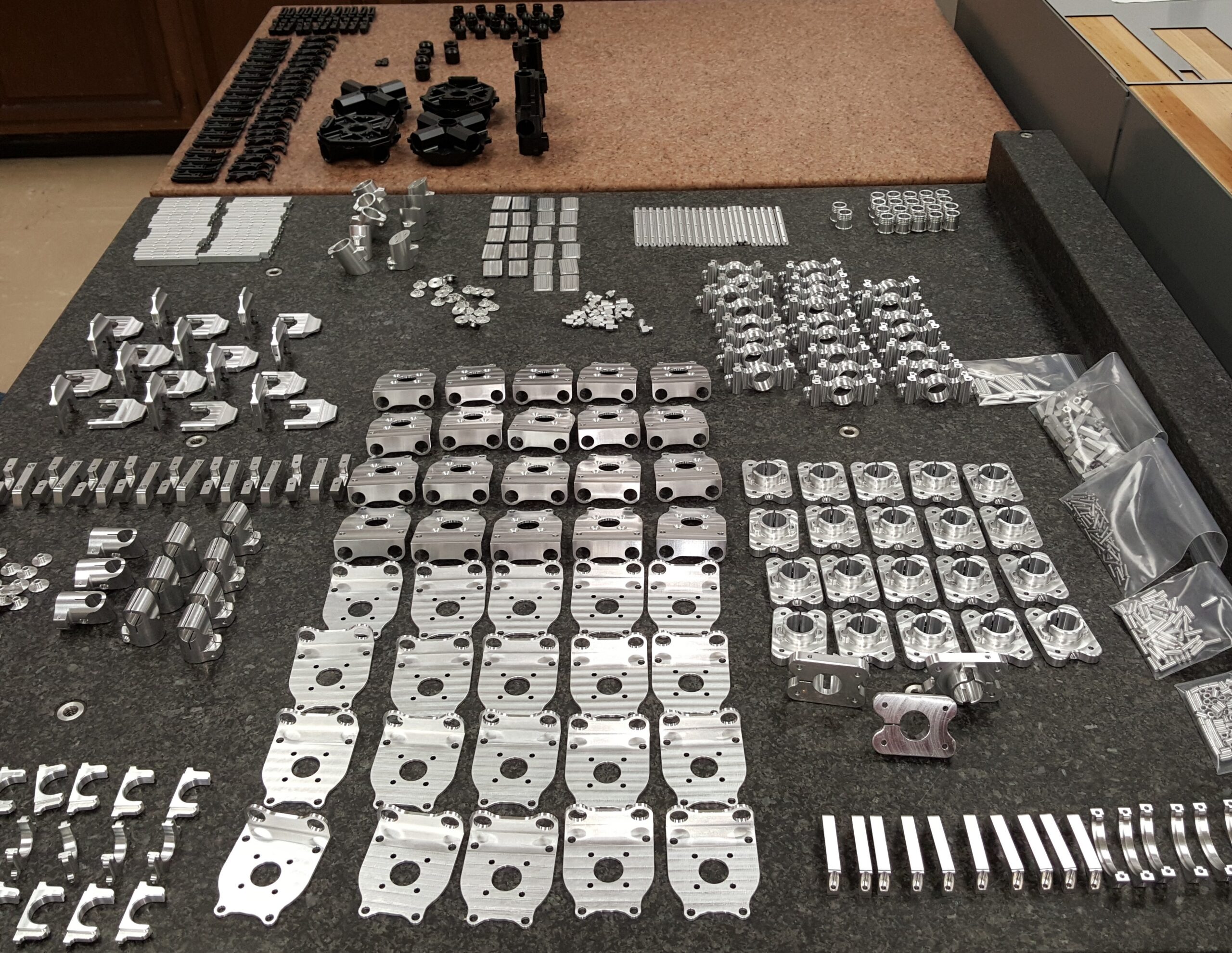
To support this work, our ITAR-registered machine shop has built a deep network of verified vendors with expertise in anodizing, plating, complex masking, part marking, labeling, and proprietary coatings. Some of the parts we handle carry three or more coating specifications, and we know exactly which vendors are best suited for that kind of complexity.
That network has grown over years of onboarding suppliers based on what our customers need. If a customer has a preferred vendor for a specific process, we have a streamlined way to bring them on board. If they don’t have a preference and simply need a spec met, we likely already have the right vendor identified.
From machining through finishing, coating, and marking, we manage the full process so the customer doesn’t have to coordinate across multiple vendors. They get a single point of contact and a completed order.
Let Us Take On the Hard Parts
We know that finding the right machining partner for defense applications is not always easy. Some companies are dealing with parts that are too specialized for most shops to quote with confidence, while others have a vendor who can make the prototype parts but cannot maintain consistent quality once production volume ramps up. In some cases, the project is still early and the real challenge is bridging the gap between a working prototype and a repeatable, production-ready process.
Whatever the situation looks like, those are the kinds of problems we want to help solve. Wagner Machine is built for the work that other shops tend to pass on, whether that means detailed geometries, demanding finishing requirements, tight tolerances on select features, or a need for exceptional consistency across every part in a production run.
If you have a defense manufacturing project that could benefit from a capable and experienced precision CNC machining partner, we would like to hear about it.